Panel
Renewable Island Energy Systems: Challenges and Opportunities - From Feasible Scenarios to Implementable Pathways
Moderator

Prof. Pedro Cabrera
Pedro Cabrera is an Associate Professor in the Department of Mechanical Engineering at the University of Las Palmas de Gran Canaria (ULPGC), where he coordinates the Group for the Research on Renewable Energy Systems (GRRES). His research focuses on the water–energy nexus and the application of Smart Energy Systems concepts in island contexts, with particular emphasis on Power-to-Water systems and the development of intelligent solutions for integrating renewable energy into desalination and improving the efficiency of water and energy resource management.
He completed his PhD in 2018 and has since worked on renewable energy integration, machine learning, intelligent control, and sustainable energy systems planning. His research addresses innovative pathways for the energy transition, with emphasis on sector coupling, system flexibility, and the efficient use of local resources. He has also contributed to the development of the MATLAB Toolbox for EnergyPLAN, a tool designed to support advanced energy systems analysis and planning through the integration of MATLAB and EnergyPLAN.
Islands face distinctive energy challenges, including dependence on imported fossil fuels, weak or isolated electricity grids, high energy costs, limited land availability and significant seasonal variations in demand. At the same time, their clearly defined system boundaries and abundant renewable resources make them valuable environments for developing and demonstrating innovative energy solutions. Achieving high shares of variable renewable energy requires more than increasing wind and solar capacity. Storage, demand-side flexibility and coordination between electricity, water, transport, heating and cooling can improve system reliability and reduce renewable curtailment. Desalination plants, pumping stations, water storage and electric mobility can provide particularly valuable flexibility in island systems. However, there is no single pathway suitable for every island. Batteries, pumped-hydroelectric storage, hydrogen, Power-to-X and interconnections present different advantages depending on system size, geography, available resources and infrastructure. Although many studies demonstrate that 100% renewable island energy systems are technically feasible, their economic viability, grid stability, territorial requirements, governance and practical implementation remain insufficiently addressed. This panel will bring together experts in energy-system planning, renewable integration, desalination, storage and sector coupling. By combining modelling experience with lessons from demonstration projects, the discussion will examine how technically feasible scenarios can be transformed into reliable, affordable and implementable transition pathways.
Speakers
Prof. Daniele Groppi
Sapienza University of Rome, Roma, Italy
Daniele Groppi is Associate Professor of Energy Planning and Building Physics at the Department of Planning, Design, Technology for Architecture of Sapienza University of Rome. The research areas on which Daniele Groppi works focus on the topic of energy planning, therefore including issues of energy policy and economics to plan a sustainable and fair energy transition. In particular, his research focuses on the optimal use of renewable energy sources, with particular reference to flexible energy systems based on the concepts of smart energy systems, sector coupling and Power-to-X through the development of optimization models and energy scenarios at different scales, from building to Country.
The Role of Sector Coupling in Planning the Transition of a Smart Energy Island
Islands serve as critical testbeds for the clean energy transition, yet their decarbonization requires strategies distinct from mainland paradigms. Due to geographical isolation, insular energy profiles are uniquely dominated by sectors that differ significantly in relative weight from mainland analyses—most notably maritime transport, which can account for nearly 50% of total energy consumption and greenhouse gas emissions, and energy-intensive water supply/desalination. Integrating high shares of Variable Renewable Energy Sources (vRES) into isolated grids creates severe stability challenges, shifting the need for flexibility onto demand-side management.
This talk will deal with evaluating the role of sector coupling and Demand Response (DR) as primary flexibility solutions through advanced energy system modeling applied to the case study of Favignana Island, Italy, assessing the integration of Power-to-Heat, Power-to-Transport (including maritime sector decarbonization), and Power-to-Water frameworks alongside technical grid stability constraints.
Results demonstrate that coupling the power grid with island-specific end-use sectors effectively absorbs non-dispatchable renewable excess, mitigates curtailment, and supports system stability. Compared to standalone electricity storage, sector coupling delivers superior carbon avoidance and economic savings while addressing the core drivers of insular emissions. Ultimately, this talk will support the statement that successful island decarbonization depends on prioritizing key local end-use sectors through tailored sector-coupling strategies rather than replicating mainland energy transition pathways.

Prof. Neven Duić
University of Zagreb, Zagreb, Croatia
Neven Duic is a Professor in Energy Planning, Policy and Economics since 2001, at Power Engineering and Energy Management Chair, Department of Energy, Power Engineering and Environment, Faculty of Mechanical Engineering and Naval Architecture, University of Zagreb. He is vice-president of Croatian Academy of Engineering and Chair of organising Committee of CAETS 2023. He is member of International Scientific Committee of Dubrovnik Conference on Energy, Water and Environment Systems since 2003 and chair of its Local Organising Committee since 2007. He is co-Editor of Energy Conversion and Management, subject Editor of Energy, Editorial Board member of Applied Energy, member of regional editorial board of Thermal Science Journal and Editor-in-Chief of Journal of Sustainable Development of Energy, Water and Environment Systems. His research covers areas of energy planning of energy systems with high penetration of renewables, sustainable communities, energy policy, energy economics, mitigation of climate change, energy efficiency and combustion engineering.
Why are islands unfulfilled promise of the energy transition?
Islands should be among the first and most successful adopters of the energy transition. Energy costs on islands are typically high, and electricity systems have often relied heavily on expensive imported diesel fuel, creating strong economic incentives for renewable energy deployment. Even before the emergence of battery storage and advanced demand-response technologies, integrating significant shares, typically up to 20% wind and up to 10% solar generation was technically feasible. Today, with mature battery technologies and the growing flexibility offered by electrified demand, island energy systems can, from a techno-economic perspective, achieve near 100% renewable energy supply. Transport electrification offers particularly attractive opportunities for islands, where travel distances are limited and charging infrastructure requirements are relatively modest. In addition, much of the demand for industrial and residential heat can be electrified, further reducing dependence on imported fossil fuels. Yet despite these advantages, many islands have not become pioneers of the clean energy transition. The primary obstacles are often not technical or economic but institutional and socio-political. New energy sectors require local supply chains, maintenance services, skilled personnel, and innovative business models, all of which can be difficult to establish in small and geographically isolated communities. These emerging industries must also compete with entrenched interests linked to existing fossil fuel supply chains. As a result, larger islands with more diversified economies and competitive markets tend to progress faster, while smaller islands can become trapped in a transition stalemate. Overcoming this inertia often requires strong political leadership, targeted public support, or external financial assistance. At the same time, policy barriers such as regulated national electricity pricing, insufficient local market structures, and limited opportunities for community participation can prevent islands from utilizing the flexibility tools that are essential for high shares of renewable energy.
Prof. Henning Meschede
Paderborn University, Paderborn, Germany
Henning Meschede is Professor of Energy Systems Technologies at Paderborn University. The focus of his group is on the research and application of methods for the design and construction of decentralised, smart, renewable energy systems with focus on the integration of the various sectors of electricity, heat and mobility. In particular, the research analysis conceptualisation of sector coupling, flexible energy demands and the role of industry and commerce in renewable energy systems and grids as well as the sensitivity of energy modelling through probabilistic input time series and future energy data-based business models.
After his research work at the University of Kassel, Henning moved to an energy utility in Dortmund, where he continued to work as a project coordinator for digital, data-based value-added services in the energy industry.
He is involved in several projects on integrated energy systems, energy transition in the industry and municipal heat transition as a principle investigator and coordinator. The results of his work have been published in several papers and at scientific and business conferences. Among others, Henning Meschede is member of International Scientific Board of of the Sustainable Development of Energy, Water and Environment Systems (SDEWES) Centre, Speaker of Competence Centre for Sustainable Energy Technology (KET) at Paderborn University and member of the board of Software Innovation Campus Paderborn (SICP).
Islands after the blueprint: from demonstration to diagnosis
In the past, islands were regarded as test beds and blueprints for renewable energy systems. Since then, large-scale systems have been implemented not only on islands but also on the mainland, and promising technological approaches such as sector coupling, electrification and inverter-based power systems are being driven forward with a view to mainland situations rather than island scenarios. Furthermore, coastal islands are increasingly becoming physical nodes and central energy hubs of continental infrastructure. Does this diminish the relevance of islands — or does it change their function?
The latter. Islands may progress faster reaching 100% RES and thus still act as laboratories for fully inverter-based supply systems — but as early-arriving edge cases rather than scale models. What transfers is operational experience on system strength, protection and grid code requirements, not architectures.
Furthermore, the energy transition is more than just the implementation of technologies. It also requires public acceptance and adjustments to energy markets and energy consumption. Here, isolation offers the advantage of being able to evaluate the actual results of individual measures without these being overshadowed by other measures within a larger system. The diversity of islands is not an obstacle to replication, but the sample itself — provided it is treated as a comparative typology rather than a collection of individual cases. Islands can thus continue to serve as test beds and models, though less for technology than for the economic and institutional adjustments the transition still requires. And being the only energy systems whose entire balance boundary can realistically be instrumented, they remain the natural validation cases for bridging the gap between theory and practical implementation.
Mr. Gonzalo Piernavieja Izquierdo
Instituto Tecnológico de Canarias, Canary Islands, Spain
Gonzalo Piernavieja holds a Degree in Physics (University of Munich, Germany) and a Post-Graduate Course in Energy and Environmental Management (Technical University of Berlin, Germany). His professional career started at Munich's energy supply company (Stadtwerke München), where he contributed to set up one of the first grid connected photovoltaic installations in Germany (1991/2). In 1993 he returned to the Canary Islands to work as manager in renewable energy and water projects at the Process Engineering Department of the Universidad de Las Palmas de Gran Canaria. In 1996 he joined the Canary Islands Institute of Technology (ITC) as Coordinator of the Solar Energy Department. Currently, Mr. Piernavieja is the Director of ITC's R&D&I Division, which carries out applied research activities in emerging technological fields (renewable energies, water technologies, biotechnology, environmental technologies, biomedical-, mechanical- and software-engineering). The Division has 9 Departments with a total staff of 170 persons; its Renewable Energies Department carries out energy planning consultancy services to the Regional Government of the Canary Islands and other institutions.
Research Under Constraints: Enabling Global Collaboration for Sustainable Innovations
Moderator
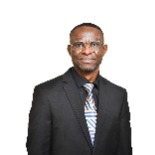
Prof. John Kabuba
Kabuba is an Associate Professor and Work Integrated Learning Coordinator in the Department of Chemical and Metallurgical Engineering, Vaal University Technology. Kabuba hold Doctoral’ s degree in Extraction Metallurgy, Master’s degree in Chemical Engineering from the University of Johannesburg; B.Eng. and B.Sc in Chemical Engineering from the University of Lubumbashi (DR Congo). He successfully completed Strengthening Postgraduate Supervision at Rhodes University in 2020 and the Managing and Leading People Programme (LPP) at University of the Witwatersrand in 2019. He has more than 19 years’ experience in academia which he gained at University of Johannesburg and Vaal University of Technology. Kabuba’s teaching interests and expertise are in Chemical Process Industries, Chemical Process Control, Thermodynamics as well as Applied Thermodynamics. He is a recipient of several awards and scholarships for academic excellence. He has extensive track record in human capacity development having supervised 109 Bachelor’s, 11 Master’s and 3 Doctoral students to completion. He has published more than 90 international peer reviewed and refereed scientific articles in journals, conferences, book chapters and book. His research interests are mainly in the broad areas of Wastewater treatment, Catalysis, Hydrometallurgy and Neural Network Applications.
Groundbreaking solutions to energy, water, and environmental challenges are often developed in regions where researchers face significant constraints, including limited funding, infrastructure, and opportunities for international engagement. This panel brings together award-winning scientists from Africa, Asia, Latin America, and the Middle East to share how they have advanced impactful research under challenging conditions and contributed to sustainable development in their regions. Through regional case studies and personal experiences, panelists will discuss barriers to scientific collaboration, mobility, and publication, while highlighting practical solutions such as international partnerships, hybrid participation, and open science approaches. The session will explore how global research ecosystems can better integrate underrepresented regions and how conferences, networks, and publishing models can foster more inclusive and effective scientific collaboration. Together, the discussion will offer a systems-level perspective on strengthening innovation and accelerating sustainable solutions worldwide.
Speakers
Dr. Fadia alhaj hussien
Hama university, Hama, Syria
Dr. Fadia AlHaj Hussien is a researcher and lecturer in Organic Chemistry at the Faculty of Pharmacy, University of Hama, Syria. She holds a Ph.D. in Organic Chemistry and has more than ten years of experience in teaching and research. Her research focuses on green chemistry, heterogeneous catalysis, sustainable organic synthesis, industrial waste valorization, and renewable energy applications. She is the recipient of the L'Oréal–UNESCO For Women in Science Levant Young Talents Award (2022) and the OWSD–Elsevier Foundation Award for Early-Career Women Scientists (2026). She is committed to advancing sustainable scientific research and strengthening international collaboration despite working in a resource-constrained environment.
Doing High-Impact Research Under Resource Constraints: A Personal Perspective from Syria
Scientific excellence should not be determined by access to advanced laboratories alone. As a researcher in Syria, I have experienced the challenges of conducting meaningful research under severe limitations, including restricted access to analytical instrumentation, research funding, chemicals, and international collaboration. Rather than preventing scientific progress, these constraints have encouraged creativity, resilience, and innovative approaches to research.
My presentation will share practical experiences in conducting internationally recognized research despite limited resources, building collaborations across borders, publishing in high-impact journals, and transforming locally available materials into sustainable research opportunities. I will also discuss how international initiatives such as OWSD have empowered researchers working in challenging environments and how stronger global partnerships can help bridge the scientific gap between resource-limited and well-equipped institutions.
The presentation aims to stimulate discussion on practical mechanisms to make global scientific collaboration more inclusive, equitable, and sustainable.
Dr. Tabitha Amollo
Egerton University, Nakuru, Kenya
Dr Tabitha A. Amollo holds a Ph.D. in Physics (condensed matter physics) from the University of KwaZulu-Natal, South Africa. She is currently a faculty member of Egerton University, Kenya, where she has served as the chairperson of the Department of Physics. Dr. Amollo’s research interests include photovoltaics, plasma technology, nanomaterials and nanotechnology, and thermoelectricity. Broadly, her research focuses on materials and device engineering for energy conversion devices, and in advancing thin film technology. She is the leader of the materials physics research group at Egerton University. She is passionate about mentoring and training young researchers, and advocates for inclusivity in STEM.
Dr. Cristina Dominguez
NRECA International, Zurich, Switzerland
Project Director - Energy Access and Productive Use of Electricity at NRECA International. Dr. Dominguez holds a PhD in Sustainable Energy Access from ETH Zurich and has over 9 years of experience in the international cooperation sector supporting countries with their energy access and transition strategies, having managed and implemented different projects for the public, private and international development sectors in Africa, Asia, and Latin America. Her experience encompasses delivering data-driven geospatial models for electrification and clean cooking access planning, reinforcing institutional and community capacity on energy transition, developing programs for enhancing productive uses of electricity and sustainable development, and leading engagements with cross-sectoral stakeholders to enhance collaboration and unlock access to finance.
Winner of the Organization for Women in Science for the Developing World (OWSD) - Elsevier Foundation Award for my contributions to SDG7 (2026), representing the Latin American region. Appointed as Secretary of the Executive Committee of the OWSD Guatemalan chapter (2023-2024). Appointed as Young Ambassador for Global Electrification by the Global Sustainable Electricity Partnership. Featured as Role Model in the 1Million Women in STEM Campaign.
LinkedIn: https://gt.linkedin.com/in/cristinadominguezher
Prof. Duleeka Sandamali Gunarathne
University of Moratuwa, Moratuwa, Sri Lanka
Prof. Duleeka Sandamali Gunarathne holds a BSc (Hons) in Chemical and Process Engineering with a minor in Energy Engineering from University of Moratuwa, Sri Lanka, MSc in Sustainable Energy Engineering and PhD in Materials Science and Engineering from KTH Royal Institute of Technology, Sweden. Her research focuses on biomass pretreatment, thermochemical conversion, and development of sustainable bioenergy solutions. Her contributions to energy education includes co-developing Sri Lanka's first joint MSc programme in Energy for Circular Economy. She serves as a technical expert and advisor to government and industry and was the Country Representative for Erasmus Mundus Association from 2022 to 2024. Her achievements have been recognized through several awards, including President's Award for Scientific Publications and OWSD–Elsevier Foundation Award for Early-Career Women Scientists in the Developing World (Clean and Affordable Energy, Asia region).
Dr. Ghafi Kondi Akara
African Institute for Mathematical Sciences Research and Innovation Centre (AIMS RIC), Kigali, Rwanda
Dr. Ghafi Kondi Akara, also known as Victoire/Vicky Kondi Akara, is a climate scientist, climate–energy specialist, and Resident Researcher in Climate Change Science at the AIMS Research and Innovation Centre in Kigali, Rwanda. She holds a Ph.D. in Physics specializing in Energy, Climate and Environment, with additional academic training in environmental management, water, sanitation, and environment.
With over 13 years of experience, she works at the interface of climate change, energy, health, environmental management, and sustainable development. Her expertise includes climate modelling, energy systems analysis, climate-health risk assessment, data analysis, MRV and Enhanced Transparency Framework systems, stakeholder engagement, capacity building, and results-based reporting.
At AIMS RIC, Dr. Kondi Akara contributes to climate mitigation and adaptation research, supervises and mentors Master’s and Ph.D. students, and supports policy-relevant research across Africa. She leads and contributes to major initiatives including CLARITY-Africa, where she coordinates heat-related research in Rwanda focusing on schools, construction workers, climate-health risks, stakeholder engagement, and capacity building. She also supports climate-sensitive disease early warning systems, energy-sector MRV frameworks, the African Energy Efficiency Strategy and Action Plan, and Rwanda’s methane and Short-Lived Climate Pollutant planning.
Dr. Kondi Akara is strongly committed to gender equality, inclusion, and science leadership. She previously served as Gender and Inclusion Officer at AIMS Rwanda and actively promotes women and youth in STEM. Her work has received international recognition, including the 2026 OWSD–Elsevier Foundation Award in Sustainable, Affordable and Reliable Energy, Africa Climate Ambassador 2024, African Union Volunteer 2021, and Board Member of the International Network of Women Engineers and Scientists for 2024–2026.
The Energy Transition Paradox: Data Centres as Extensive Energy Consumers and the Backbone of Digitalization, Electrification, and Smart Energy Systems
Moderator

Prof. Goran Krajačić
Goran Krajacic, Ph.D., (http://powerlab.fsb.hr/gkrajacic/) is working as associate professor at DEPEE (UZ FSB) and head of Power Engineering and Energy Management Chair. His field of work includes energy markets, research in energy planning, energy system optimization; island energy system modelling and optimization, development of models for simulation of energy systems, renewable energy sources, energy storage, energy economics and policy. Since his employment at DEPEE he has been working on the many international and EU projects as well as on national project Smart Energy Storage for Sustainable Development of Energy Systems. He worked on development of SEAPs for local communities on the islands and development of financial mechanisms for support of the energy storage technologies. He was also involved in development of Strategy for self-sufficient island Unije as well as several other strategies for achieving 100% RES energy systems on the islands. Currently he is coordinating FSB participation in the project H2020-LC-SC3-2018-ES-SCC- INSULAE- Maximizing the impact of innovative energy approaches in the EU islands. Since 2002 he has been a member of Local organising committee of Sustainable Development of Energy, Water and Environment Systems Conference (SDEWES). He is also SDEWES Centre Secretary since 2009. The results of his scientific work were published in the more than 80 papers, according SCOPUS database his h index is 32.
Artificial Intelligence and the broader push for digitalization are fundamental to the global energy transition. Cloud infrastructure provides the indispensable computational backbone required for the widespread electrification of transport, industry, and heating, as well as the real-time balancing of smart energy systems. However, this data-intensive paradigm introduces a critical paradox: the very digital infrastructure necessary to decarbonize the global energy system is rapidly becoming one of its most intensive and concentrated electrical loads.
According to the International Energy Agency report "Key Questions on Energy and AI", global data centre electricity consumption reached 485 TWh in 2025 and is projected to roughly double to 950 TWh by 2030, capturing nearly 3% of total global electricity demand. The immense physical realities of AI computation are pushing data centres to the absolute limits of current infrastructure. The IEA projects that by 2027, a single AI server rack that is no larger than a household refrigerator could draw a peak power demand equivalent to 65 households, while requiring the evacuation of heat comparable to 30 natural gas boilers. Yet, this unprecedented energy footprint simultaneously presents major opportunities for grid integration and sector coupling. Because AI model training and usage induce rapid load swings (often exceeding 50% of rated capacity within a single second), data centres are rapidly adopting advanced energy storage. By 2030, an estimated 20 to 25 GW of battery storage could be installed in data centres globally. With the appropriate market incentives and regulatory frameworks, this transforms data centres from passive, heavy consumers into highly flexible, grid-friendly assets that can stabilize intermittent renewable energy generation. This scientific panel brings together experts in long-term energy planning, thermodynamic management, and digital infrastructure to explore the symbiotic relationship between IT networks and smart energy systems.
Speakers
Prof. Umberto Berardi
Polytechnic University of Bari, Bari, Italy
Prof. Umberto Berardi is a Full Professor of Energy Transition and Building Physics at Politecnico di Bari. He currently serves as the President of the International Association of Building Physics (IABP). His research focuses on innovative technologies and advanced materials for enhancing the performance and sustainability of the built environment. He has an extensive publication record, including 200 peer-reviewed journal articles, 240 international conference papers, and ten books, with his work receiving over 25,000 citations. He is the Founder Director of the Building Science BeTOP Lab at Toronto Metropolitan University in Canada and previously held the NSERC Canada Research Chair in Building Science (2021–2024). He has chaired several major international conferences, including the Third CEES 2025 in Bari, the Sustainability Forum 2024 in Toronto, the International Conference on Building Physics (IBPC) 2024 in Toronto, and X IAQVEC 2019 in Bari.
Prof. Berardi is an Associate Editor of the Journal of Building Engineering and serves on the editorial boards of numerous leading journals, including Energy and Buildings, Sustainable Cities and Society, Journal of Building Performance Simulation, Building Simulation, Sustainable Development, Intelligent Building International, Buildings, Sustainability, and Energy and Policy Research.
Possibilities of the Adriatic region as an hub for data centers
According to the International Energy Agency (IEA), data centres around the world consumed almost 2% of global energy demand. The most critical element remains their cooling. Indeed, what data centers really need is not simply to receive energy, but to receive it in a stable and resilient form, as continuity is vital to prevent digital blackouts. The panel will address the challenge of installing data centers in regions with stronger penetration of renewable energy technologies. The focus will be on the possibility that the Mediterranean area (and in particular the Adriatic region) could play for the digital transition. The Italian infrastructure has hence set the goal of reducing dependency on foreign energy (currently at 60%, with a target of 37% by 2030); doubling the installed capacity of renewables, from 50 GW in 2024 to 107 GW by 2030, a growth of +57 GW; and integrating 12.9 GWh of storage capacity by 2030, an essential factor in managing the intermittent nature of renewable sources and ensuring the continuity of supply.
Prof. Ursula Eicker
Concordia University, Montreal, Canada
Prof. Ursula Eicker is the Canada Excellence Research Chair (CERC) in Smart, Sustainable and Resilient Communities and Cities and Founder of the Next-Generation Cities Institute at Concordia University in Montréal.
Prof. Eicker’s research interest focuses on zero emission urban transformation. She is working on multiple eco-district projects and is building an urban modeling and data platform to assess urban decarbonisation strategies. Her team also designs gamification interfaces and web based digital twins to engage users. She has published 7 books, 24 book contributions, over 100 Peer-Reviewed Papers and more than 330 Conference Papers.
Prof. Moon Keun Kim
Oslo Metropolitan University, Oslo, Norway
Evaluating How Data Normalization Approaches Affect Electricity Consumption Prediction in Buildings Across Different ANN Models
This study examines how data normalization affects the accuracy of building electricity consumption predictions across four Artificial Neural Network (ANN) algorithms: Long Short-Term Memory (LSTM), Levenberg-Marquardt Back-propagation (LMBP), Recurrent Neural Networks (RNN), and General Regression Neural Network (GRNN). Four normalization methods were tested on experimental datasets.
Results showed that LSTM paired with Min-Max normalization delivered the best overall predictive performance, achieving a Coefficient of Variation of the Root Mean Square Error (CVRMSE) of 10.3 and a Normalized Mean Bias Error (NMBE) of 0.6. The other three normalization methods also produced results reasonably consistent with the empirical data, though with minor variations in accuracy.
For LMBP, Z-score normalization yielded the best results among the normalization approaches tested for that model, though differences between models overall were relatively small. The RNN model performed best with Gaussian normalization, recording the lowest CVRMSE (11.8) and an NMBE of 0.6. Interestingly, the GRNN model performed best using raw, unprocessed data, achieving the lowest CVRMSE (19.2) and an NMBE of 1.0.
Overall, the findings demonstrate that data normalization plays a significant role in shaping the predictive accuracy of ANN models, and that selecting the appropriate normalization technique can meaningfully improve electricity consumption forecasting in buildings.
Dr. Ghafi Kondi Akara
African Institute for Mathematical Sciences Research and Innovation Centre (AIMS RIC), Kigali, Rwanda
Dr. Ghafi Kondi Akara, also known as Victoire/Vicky Kondi Akara, is a climate scientist, climate–energy specialist, and Resident Researcher in Climate Change Science at the AIMS Research and Innovation Centre in Kigali, Rwanda. She holds a Ph.D. in Physics specializing in Energy, Climate and Environment, with additional academic training in environmental management, water, sanitation, and environment.
With over 13 years of experience, she works at the interface of climate change, energy, health, environmental management, and sustainable development. Her expertise includes climate modelling, energy systems analysis, climate-health risk assessment, data analysis, MRV and Enhanced Transparency Framework systems, stakeholder engagement, capacity building, and results-based reporting.
At AIMS RIC, Dr. Kondi Akara contributes to climate mitigation and adaptation research, supervises and mentors Master’s and Ph.D. students, and supports policy-relevant research across Africa. She leads and contributes to major initiatives including CLARITY-Africa, where she coordinates heat-related research in Rwanda focusing on schools, construction workers, climate-health risks, stakeholder engagement, and capacity building. She also supports climate-sensitive disease early warning systems, energy-sector MRV frameworks, the African Energy Efficiency Strategy and Action Plan, and Rwanda’s methane and Short-Lived Climate Pollutant planning.
Dr. Kondi Akara is strongly committed to gender equality, inclusion, and science leadership. She previously served as Gender and Inclusion Officer at AIMS Rwanda and actively promotes women and youth in STEM. Her work has received international recognition, including the 2026 OWSD–Elsevier Foundation Award in Sustainable, Affordable and Reliable Energy, Africa Climate Ambassador 2024, African Union Volunteer 2021, and Board Member of the International Network of Women Engineers and Scientists for 2024–2026.